The Poetics of Opposition: Metaphors for Conflict Turned to Passion
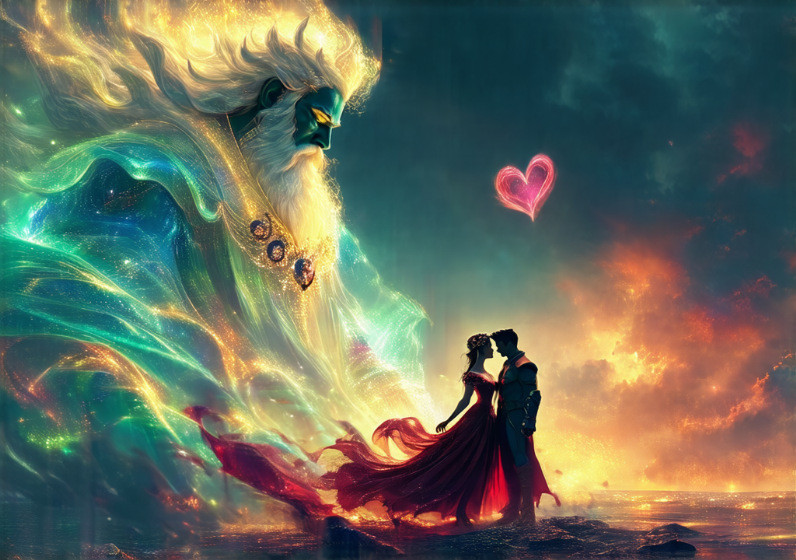
✨ The Alchemy of Rupture: When War Becomes Courtship
To say that we fall in love is a poetic lie. In truth, we do not fall; we are ambushed. We are conquered by a stranger who knew how to bypass our fortifications before we had even noticed the siege had begun. As philosophers of the heart, we have spent centuries constructing elaborate metaphors for this experience. We speak of being struck, captured, dazzled, and devoured. We describe intimacy as a battlefield where victory is indistinguishable from surrender. But why? Why does the human mind so persistently borrow the language of conflict to describe the tenderest of our desires?
If we peel back the layers of romantic cliché, we find that love has never been a peaceful negotiation. It is an act of opposition. It is the friction between two wills, two histories, and two sets of expectations grinding against each other until heat—and eventually light—is produced. To understand the poetics of this opposition, we must look at how we have historically narrated the collision of souls, and why conflict remains the most honest metaphor for passion.
Consider the classic trope of the lovers who begin as rivals. From the bitter banter of Pride and Prejudice to the smoldering tension in countless modern screenplays, we are conditioned to believe that if you don’t fight it, you don’t want it. This is not merely a narrative convenience; it is an ontological truth about human desire. We do not fall for those who agree with us; we fall for those who challenge us. Agreement is comfortable; opposition is exciting. When a partner mirrors our own opinions back to us, we feel seen but rarely intrigued. When they contradict us, question our assumptions, or simply exist in a way that requires our active engagement, we feel alive. The mind, after all, craves novelty. And nothing is more novel than an opponent who can match your wit and outmaneuver your ego.
The metaphor of the duel is perhaps the most precise description of early romance. In a duel, two parties stand face to face under implicit rules that keep them from simply killing each other—and in love, those rules are what we call manners, social norms, or simple self-preservation. There is a shared understanding: I want you, but I cannot simply take you; I must earn your attention. This dynamic creates a beautiful tension. Every glance exchanged, every slightly delayed reply to a text message, every carefully chosen word in conversation becomes a small move in a strategic game. We are not just communicating; we are negotiating the terms of our own surrender. And there is a peculiar pleasure in that negotiation. Because if the other person were too easy to win over, they would seem cheap. The resistance makes them valuable.
This brings us to an older and more visceral metaphor: the siege. In the old romances, love was often described as a storm of passion breaking down the walls of chastity or social propriety. We speak of being "breached," of defenses being "lowered." These are military terms applied to the most intimate corners of human experience. And they work because they capture something essential: that love requires us to let someone in when we would rather keep them out. To fall in love is to admit that our self-sufficiency was an illusion. We build castles around our hearts—walls made of pride, past hurts, rational calculations—and then some stranger finds the gate and walks right through it.
Now, you might object: but surely there are gentle loves? Slow burns? The quiet companionship of two people who simply… fit together? And yes, such loves exist. But even in their calmest moments, they rest on a foundation of past oppositions that have been resolved. The couple who has been married for forty years and now shares a quiet life did not arrive there by default. They arrived there after years of small wars over dishes, careers, family expectations, and the thousand tiny frictions that make two separate human beings into one shared world. Every "yes" they say to each other is a yes that was preceded by a dozen silent "noes"—or at least, by the possibility of them.
There is also a philosophical dimension here worth unpacking. In dialectical thinking, we understand that truth emerges not from two identical ideas agreeing, but from two opposing ideas in tension with each other. The thesis and antithesis produce a synthesis—something new, something richer than either original. Love operates on the same principle. Two people who are exactly alike have nothing to synthesize; they merely echo each other. But two people who differ—who see the world through different lenses, hold different values, desire different things—these two can create a third thing: a shared life that belongs to neither and both of them. The opposition is not a problem to be solved. It is the raw material from which something new is forged.
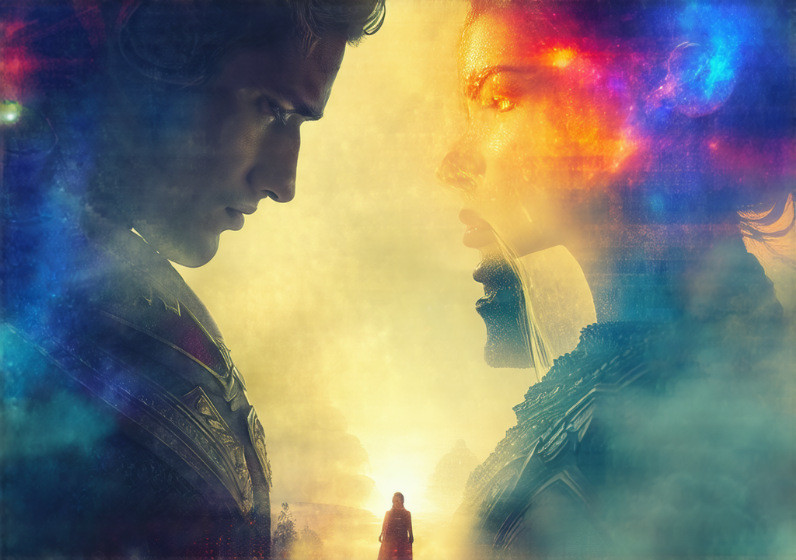
The poet Rainer Maria Rilke wrote that "love consists in this, that two solitudes protect, touch, greet each other." Notice that he says they greet each other—not merge, not dissolve, not become one. They remain separate and whole while choosing to meet at the border between their worlds. That border is a line of demarcation, which is to say: it is a frontier. And frontiers are where the most interesting exchanges happen.
Let us also consider the metaphor of fire. We speak of "burning" for someone, of a "spark," of being "heated up." Fire requires fuel and oxygen and a kind of friction to ignite. And once lit, it can consume everything in its path. The language we use for love is full of this dual nature: beautiful and destructive, warming and consuming. A great passion feels like a small apocalypse. Your old certainties burn away. Your self-image shifts. You find yourself wanting things you never wanted before, seeing the world with new eyes. It is as if your internal landscape has been rearranged by an outside force, and you are left standing in unfamiliar territory.
Perhaps this is why we so often describe love in terms of being "lost" or "found." We lose our old selves in the process. The person you were before the relationship does not fully survive it. And that loss can be frightening, which explains some of the resistance we feel at the threshold of commitment. If I let this person into my life fully, who will I be when they leave? Or when time changes us both? The fear is not just about the other person; it is about what the relationship does to our sense of self.
And so we return to the original question: why do we use metaphors of conflict for something that is supposed to be peaceful and joyful? Because love, at its core, is an act of creative destruction. It tears down our old certainties so new ones can take their place. It asks us to fight for connection in a world that often rewards isolation. It demands that we stand opposite another human being—truly opposite, with all the difference and distance that implies—and choose to bridge the gap anyway.
Not every love requires grand battles. Not every passion is a siege or a duel. But even the gentlest affection carries within it the memory of opposition: the moment before you decided to say yes, the pause before you reached out, the quiet internal negotiation between your caution and your desire. That pause is where the poetics live. It is in that small space between resistance and surrender that we find something almost holy—proof that two separate wills can choose to become one story without either losing their authorship.
So the next time someone tells you they are "madly in love," or that their partner "took their breath away" or that they felt "struck" by a stranger across a room, do not dismiss it as mere metaphor. These are the oldest and most honest ways we have of describing what actually happens when two human beings collide: a kind of beautiful war where everyone wins, provided they remember to lay down their weapons at the right moment.