The Art of the 'Almost Kiss'—And Why It's More Addictive Than the Real Thing
🌑 The Alchemy of Suspense: Why We Crave the Almost-Kiss 💋✨
By Elias Thorne, M.A. Philosophy ✒️
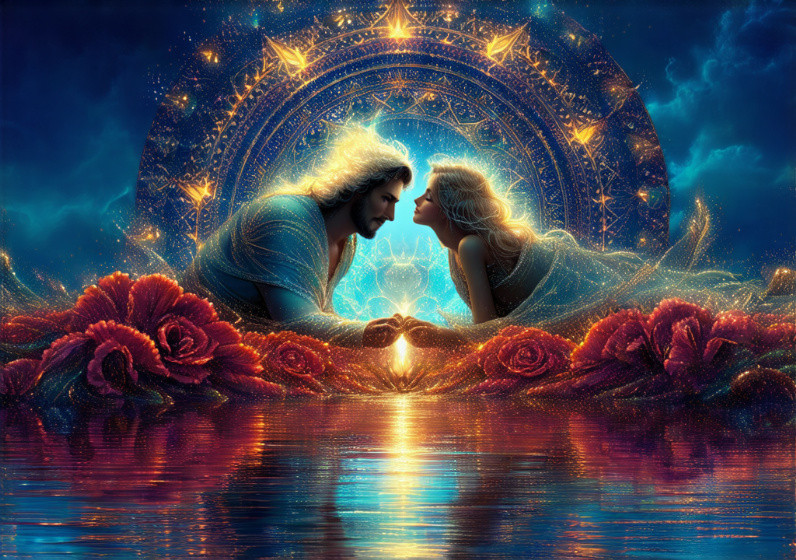
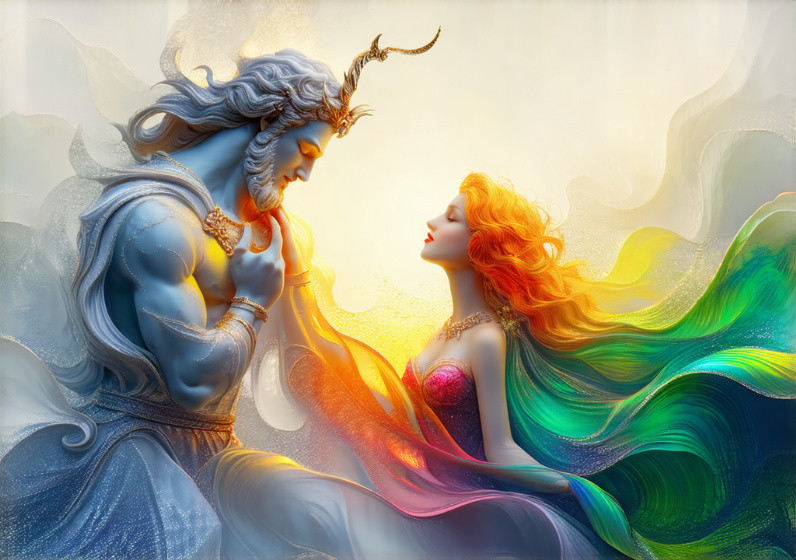
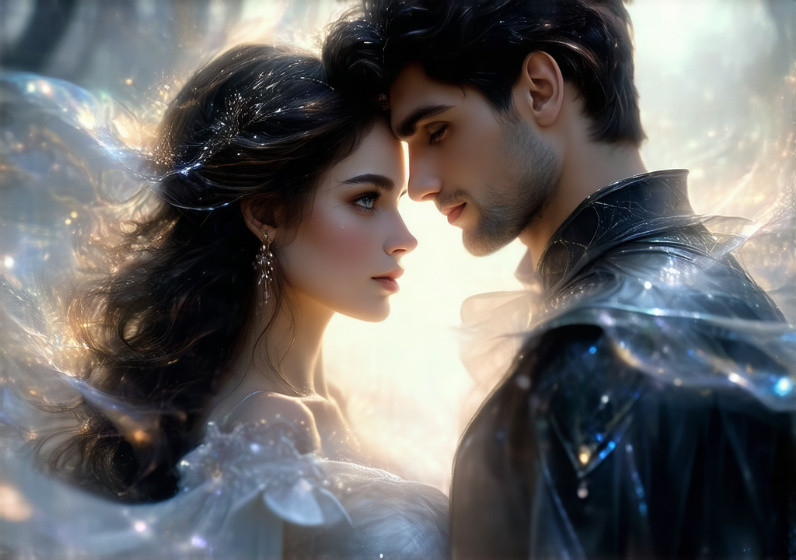
Have you ever stood inches from another person? You can smell their skin, feel the heat radiating from their chest, and sense the shift in the air as two souls lean toward one another? And then—just before your lips meet—the moment slips away. A phone buzzes. Someone calls a name. One of you pulls back, laughing with nervous delight. The kiss never happens. Yet, weeks later, that single suspended second burns brighter in your memory than any actual touch. 🌙
This is the art of the "almost-kiss"—and it is far more addictive than the real thing.
✨ The Philosophy of Suspendable Desire
In philosophy, we speak of suspense as a state where outcome remains undecided. A coin spinning in mid-air is both heads and tails at once. An almost-kiss operates on exactly this principle. It freezes time at the threshold between two possible realities: connection or separation, intimacy or distance, union or solitude. Because neither outcome has yet occurred, your mind holds all possibilities open. You don't remember a kiss as something that happened; you remember it as everything it could have been.
The philosopher Søren Kierkegaard called this "the dizziness of freedom." We are intoxicated by the moment before we choose because in that moment, every version of ourselves is still alive. The almost-kiss keeps us suspended in pure potential—untouched by consequence, unburdened by reality's rough edges. 💫
🎭 The Theater of Anticipation
Think of an almost-kiss as a play where the final act never gets written. Your mind becomes both audience and author. After it happens, you replay the scene endlessly in your head—adding details, rewriting dialogue, imagining alternate endings. In psychology, this is called counterfactual thinking: we build worlds that didn't happen because imagined scenarios feel more vivid than factual ones.
A real kiss is an event with a beginning, middle, and end. An almost-kiss has no ending—it's an open sentence, an incomplete equation. Your brain keeps working to solve it, generating dopamine not from pleasure received but from anticipation unfulfilled. The gap between expectation and reality becomes a little philosophical engine of longing that runs for weeks or months on end. 🔮
🌿 The Aesthetics of Incompleteness
Japanese aesthetics have a concept called ma—the meaningful pause, the empty space that gives shape to what surrounds it. An almost-kiss is pure ma: it's the silence between two notes in music, the white space on a page that makes words visible. The kiss itself would be a full stop; the almost-kiss is an ellipsis… And that ellipsis is where all the poetry lives.
This connects to what we might call "negative beauty"—the beauty of absence. We are moved by empty rooms, unfinished letters, songs that end before they resolve. Why? Because imperfection invites participation. Your mind fills in the gaps with its own longing, making the experience uniquely yours and infinitely personal. A real kiss belongs to both people; an almost-kiss belongs entirely to your imagination. 🕯️
💫 The Mystery of Unrevealed Truth
Here's where it gets philosophically interesting: a real kiss gives you information about another person—how they taste, how soft their lips are, whether they match yours in rhythm or pull away. An almost-kiss reveals nothing. It preserves mystery. In a world obsessed with transparency and data, the unspoken moment becomes radical. You don't know if they wanted it as much as you did. You don't know what would have happened next. That uncertainty is a small, beautiful philosophical problem your heart keeps solving over and over again.
The German philosopher Edmund Husserl described this phenomenon as intentionality—consciousness always reaches toward something beyond itself. Your desire in an almost-kiss reaches toward the other person but never fully lands on them. It hovers just above their skin, forever reaching, forever wanting. That's not failure; that's the purest form of romantic attention. 🌠
🎼 The Rhythm of Almost-Connections
Musicians know this instinctively. A held note before resolution creates more tension than the resolution itself. A jazz musician can stretch a single chord for an entire minute, and every second amplifies what comes next. Romantic relationships work on similar principles. The space between "I want you" and "you are here" is where all the music lives. An almost-kiss is that sustained note—it doesn't resolve, so it never stops building.
And this creates a subtle but important philosophical distinction: real kisses create memory; almost-kisses create myth. Memory fades and gets corrected over time. Myth deepens. The more you remember an almost-kiss, the more meaning you pour into it, the richer it becomes. It's less like recording what happened and more like composing a story about what was possible. 📖
🔮 The Metaphysics of Proximity
There's also something deeply metaphysical about near-misses in love. In quantum physics, particles exist in states of probability until observed. An almost-kiss is two people existing in superposition—close enough to affect each other's fields but not close enough to collapse into a single outcome. You both remain possibilities rather than facts. For philosophers who believe that reality is constructed through observation and relationship, this is profound: the moment where two people could have become one but didn't becomes part of your identity in ways a real kiss never could.
You carry it with you as an open question, not a closed answer. And questions are far more generative than answers—they keep inviting new thought, new feeling, new connection to yourself and others who've had similar experiences. 🌿
✨ The Ethics of Letting Go
And perhaps most importantly: the almost-kiss teaches us something about romantic ethics that real kisses often obscure. It asks whether desire requires possession. Do you need to taste someone's lips to know you wanted them? Does love require completion, or can it live beautifully in the space between wanting and having?
The philosopher Immanuel Kant would say an almost-kiss treats the other person as a subject rather than an object—you respect their autonomy by not consuming the moment. You let the relationship remain open-ended, uncommodified, free from transactional expectations. It's desire without consumption, intimacy without ownership. In a culture that equates romance with achievement and possession, the almost-kiss becomes quietly radical. 🕊️
💫 The Poetry of Unfinished Moments
So why are we so addicted to them? Because they offer something rare: beauty without cost, depth without risk, meaning without consequence. A real kiss can be awkward, sweet, or disappointing. An almost-kiss is always perfect because it's never quite real—it lives in the realm of pure possibility where nothing can go wrong and everything remains open.
They're philosophical exercises in longing that our hearts keep returning to because they remind us what love feels like before it has to deal with reality—before we have to figure out if this person is compatible, reliable, kind enough for a lifetime. The almost-kiss just asks: what would it feel like? And that question, left open, becomes a small, beautiful fire that keeps burning long after the moment has passed. 🔥
So next time you stand inches from someone and the kiss doesn't happen—don't sigh or regret it. Breathe in the space between your lips and theirs. Let the silence speak. That almost-moment is where all the magic lives. It's the art of love without the labor, beauty without burden, and desire that never has to explain itself.
It's philosophy made flesh. 💫