Stop Confusing 'Need' with 'Love' — Symbiosis Changes Everything
Stop Confusing 'Need' with 'Love' — Symbiosis Changes Everything
We have been taught to fall in love as if it were a transaction. We search for someone who can fill the holes in our lives, who will make us complete, and when that person inevitably falls short of the role we've assigned them, we feel betrayed. But what if the entire framework is wrong? What if true love isn't about needing another to fix you, but about a mutual becoming that enriches both parties without consuming either? This distinction between need and love isn't just a matter of vocabulary; it's a philosophical lens that can transform how we understand human connection at its deepest level.
The Philosophy of Need: A One-Sided Equation
When we fall in love out of need, we are operating on an unconscious contract. We seek the other person not for who they are, but for what they can provide—validation, security, excitement, or a sense of belonging that we feel is missing within ourselves. In this mode, the partner becomes a means to an end. They are useful because they satisfy a personal deficiency. This creates a subtle form of objectification where the other person's autonomy and individuality matter less than their function in our own narrative.
Psychologists and philosophers have long noted that need-based love often carries an undercurrent of anxiety. We worry about losing them not just because we miss their company, but because their absence would leave us exposed to our own incompleteness. The relationship becomes a crutch rather than a partnership. In the worst cases, this can lead to codependency or possessiveness, where freedom is seen as threat and independence is misread as distance.
Love as Symbiosis: Mutual Growth
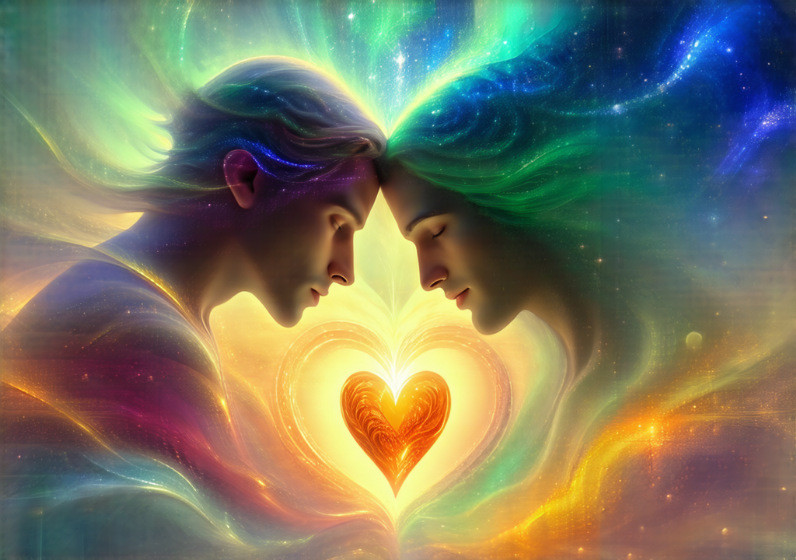
Symbiosis, in biology, refers to two different organisms living in close physical association where both benefit. When we translate this into the realm of love, we arrive at a far richer model than simple need or mere affection. In symbiotic love, each person remains distinct but is deeply connected. We are not fused; we are intertwined. The relationship becomes a space where two complete individuals choose to grow together, supporting one another's potential rather than demanding that the other fill our gaps.
This does not mean there are no needs in a loving relationship—there always are—but the key difference is balance and intention. In symbiosis, need is acknowledged but not confused with love. We appreciate each other for their own flourishing, not just for what they supply us. We celebrate their growth even when it means our role evolves or changes. This kind of love feels expansive rather than constraining, because it trusts that two separate beings can create something greater together without losing themselves.
The Practical Difference: How It Feels in Daily Life
The difference between need-based and symbiotic love becomes most visible in the small moments of everyday life. Consider a simple disagreement about how to spend a weekend or an evening. In a need-driven dynamic, one person might feel personally rejected if the other chooses a different activity because it doesn't confirm their own emotional needs. The conversation can turn into a battle for validation: "If you loved me, you'd do what I want."
In a symbiotic approach, the same disagreement becomes an opportunity for mutual understanding and creative problem-solving. Both people listen not to win but to learn how the other experiences life. Decisions emerge from respect for each person's autonomy, and both feel valued even when they don't get exactly what they initially wanted. The relationship becomes a practice in seeing through another person's eyes—a philosophical act in itself—where understanding replaces assumption.
Why This Distinction Matters More Than Ever
In an age of social media and instant gratification, our relationships can be subtly influenced by the same logic as consumer culture: we want what fills us fastest, most intensely, or most visibly. We curate connections that feed our sense of importance or comfort, but true symbiotic love requires patience, self-awareness, and a willingness to let the other person exist fully on their own terms. It asks us to examine our own motivations: Am I close to this person because they are who they are? Or because they make me feel like more of who I want to be?
This doesn't mean we should abandon hope or desire in love; desire is part of what makes connection meaningful. But when desire is anchored in genuine appreciation for the other as a whole person—flaws, ambitions, and all—it matures into a deeper form of intimacy. We are no longer seeking completion from another; we are sharing an already complete life with someone who enriches it through presence rather than utility.
A New Narrative for Love
When we stop confusing need with love, the story we tell ourselves about our relationships changes too. Instead of "I need you to be happy," we begin to say, "I'm happy in my own right, and your joy makes mine fuller." The relationship shifts from a project of self-repair into a collaborative work of creation. We build something together not because we lack anything essential within ourselves, but because two separate lights shine brighter when they are allowed to dance around one another without fear or demand.
In the end, symbiotic love is perhaps the most philosophically honest way to understand human connection. It honors individuality while celebrating interdependence. It acknowledges that we are all complex beings with our own paths, yet chooses to walk alongside someone else in a way that makes both journeys richer. If we can learn to tell the difference between needing and loving, we might just discover a form of love that is not only more stable but also far more beautiful—a love that gives rather than takes, and grows without losing itself.
Written by Elena Moreau, a philosopher exploring how human connection shapes meaning in modern life.