Kierkegaard's Aesthetic Stage: Passion Ignited by the Pursuit of Mastery
🌙 The Aesthete's Flame: When Passion Meets Perfectionism
✍️ By Maren Voss — Philosopher-in-Residence, The Local Ledger
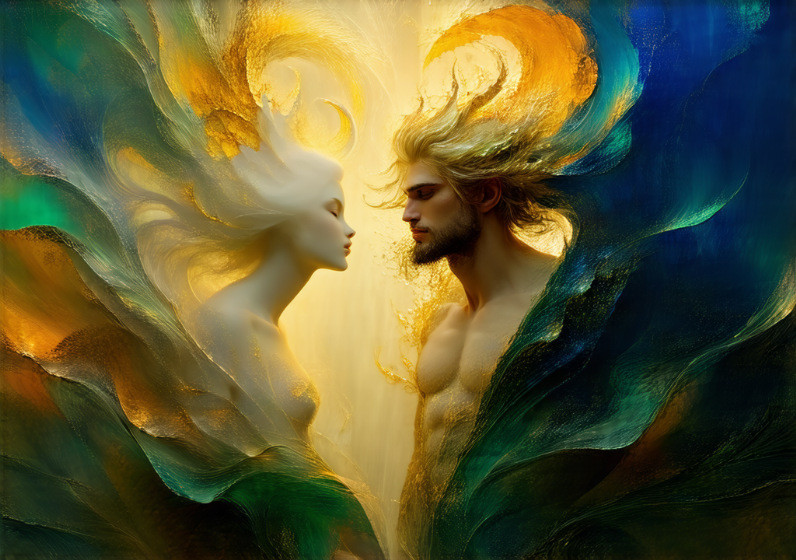
There is a particular kind of fire that does not warm the room. It burns at the edges of you. It lights up everything it touches — your hands, your sleep, your small conversations over coffee — and then it moves on, leaving behind an aftertaste of sweetness so sharp it borders on grief. This is the aesthetic stage of living as Kierkegaard described it: a life organized around intensity, around the pursuit of ever-richer experience, where mastery is not merely achieved but courted like a lover. And in that courting — in the endless reaching toward the next level of skill, the next depth of feeling, the next masterpiece — one falls in love. Not with a person, exactly. With the act of becoming.
This is a strange romance to confess in a article column. We are taught that love is for other people: spouses, children, friends. The aesthetic lover loves differently. She loves the climb more than the summit. He loves the rehearsal more than the performance. And so it is that we must ask: what does it mean to fall in love with mastery? What happens when the flame of self-perfection becomes the object of devotion — and how does that change us, for better or worse?
🔥 The First Spark: Aesthetics as Orientation
Søren Kierkegaard, writing under a constellation of pseudonyms in mid-nineteenth-century Copenhagen, mapped human existence into three stages: the aesthetic, the ethical, and the religious. The first is not about art alone — though art is its highest expression. It is an orientation toward immediacy, toward feeling, toward the present moment rendered at full saturation. The aesthete lives in a world where pleasure, pain, beauty, boredom, and desire are all equally valid currencies. There is no overarching moral ledger. There is only this: what moves me? What stirs my blood? What makes time feel like it is moving instead of merely passing?
In this orientation, mastery is not an endpoint but a flavor. The violinist does not play to be the best in the world; she plays because the vibration under her fingers is a kind of love letter to herself. The writer does not draft chapters for the reader's approval; he drafts them because the sentence that finally sings is a small act of communion with his own mind. Mastery, here, is not mastery over others or even over objects — it is mastery of experience, and in its pursuit, one falls in love with the process itself.
This is what Kierkegaard called living at the level of possibility. The aesthete keeps the door open to every next feeling, every next skill, every next horizon. And because possibility is infinite, the aesthetic life has no natural rest point. It must keep moving or it risks collapsing into boredom — and for the aesthete, boredom is a kind of death.
🕯️ The Romance of Mastery: Why It Feels Like Love
Why does pursuing mastery feel so much like falling in love? Because both involve longing, attention, and a certain tender insecurity. You do not look at a lover the way you look at a task list. You lean in. You notice small things — the way their hair falls, the particular cadence of their laugh. Mastery demands this same quality of attention: the slow learning to hear the difference between two near-identical tones, to feel the micro-tremor that separates good from great, to read a text and sense which word is doing work and which is merely decorating.
And like love, mastery carries a vulnerability that we often try to hide. The person who has devoted years to a craft knows how easily it can be unmade — by injury, by distraction, by the quiet doubt that creeps in at 3 a.m. When you have made something of yourself through skill, and then one day your hands do not cooperate, or your mind goes blank mid-sentence, you experience a small death. The lover in you looks on with tenderness. You grieve for what was and hope for what might be again.
This is where the aesthetic stage reveals its hidden cost: because it is organized around experience, it has no built-in narrative of meaning beyond the experience itself. A masterpiece that moves no one still moved the maker. That is both its freedom and its loneliness. The aesthete's love is, in a sense, a private liturgy — beautiful, total, and largely invisible to those who are not watching for it.
🌿 The Edge of the Stage: Where Aesthetics Meets Ethics
Kierkegaard was careful not to praise the aesthetic stage uncritically. He saw it as the starting point of human life — almost everyone begins there — but he also saw its limitations. The aesthete, in his fullest expression, can become a kind of connoisseur of other people's lives. Because the orientation is immediacy, the other person becomes material: a source of pleasure or pain, beauty or boredom, something to be experienced rather than met. This is not malice; it is a structural feature of the stage. But over time, it can produce a quiet form of loneliness that even rich experience cannot fully fill.
This is where the aesthetic pursuit of mastery begins to whisper toward the ethical stage: the stage of commitment, of responsibility to others, of choosing and standing by your choices. The master who has fallen in love with their craft may one day realize that craft alone does not tell them how to treat a neighbor, how to be present for a friend in grief, how to build something that outlasts their own performance. Ethics asks a question aesthetics cannot answer: What do you owe?
But and here is the subtlety Kierkegaard invites us into — the ethical stage does not cancel the aesthetic one. It incorporates it. The lover of mastery who has also learned love, commitment, and responsibility now pursues skill and serves with it. The flame does not go out; it becomes a hearth instead of a spark.
📜 A Practical Meditation: Falling in Love, Slowly
For those reading this in the coffee shop or the park bench, here is what this might look like in ordinary life:
Notice where your attention deepens. Where do you lose track of time? That place is where the aesthetic flame lives. Protect it.
Resist the comparison loop. Mastery pursued as competition becomes a different kind of love — one that loves victory over growth, and can burn out.
Keep one small act of unperfected practice. A song hummed badly, a sketch no one sees, a walk with no destination. These keep the flame human.
Ask once in a while: what do I owe? Not as guilt. As a gentle counterweight to self-absorption.
🌙 Coda: The Love That Has No Recipient
The aesthetic stage is not lesser than the ethical or religious stages. It is the place where we first learn that our inner life has weight, texture, and beauty. It is where we discover that paying close attention to a thing — a sentence, a chord, a morning light on water — can feel like being loved by the world itself. And in that discovery, we fall in love with the act of caring about something other than mere survival or status.
Kierkegaard would remind us that this stage will want to move on. The flame will ask for a hearth, a household, a purpose beyond the self. But it will not be wasted. Every master who has ever taught a student, every artist who has ever made someone feel less alone by putting feeling into form — they carried the aesthetic flame forward into shared life.
To fall in love with mastery is to say: I am not merely passing through this world; I intend to make something of my time here. It is a quiet, stubborn, beautiful devotion. And like all true loves, it asks only that we keep showing up — hands trembling, eyes open, flame still burning at the edges.