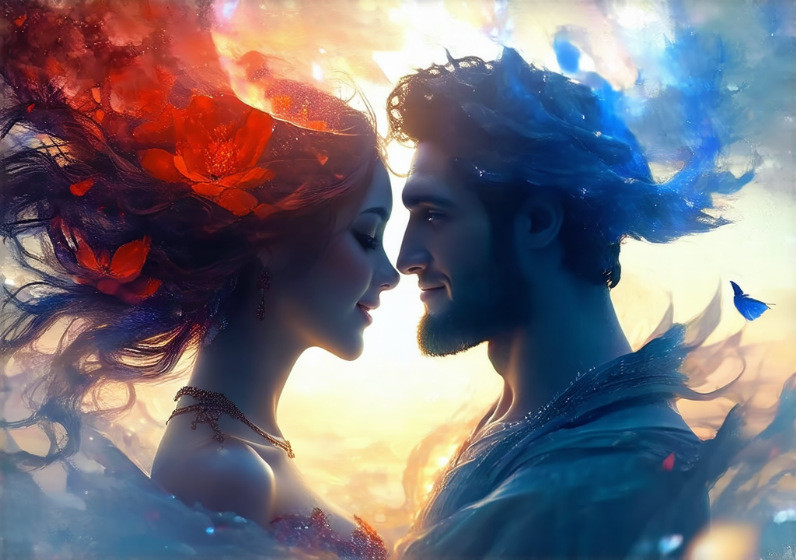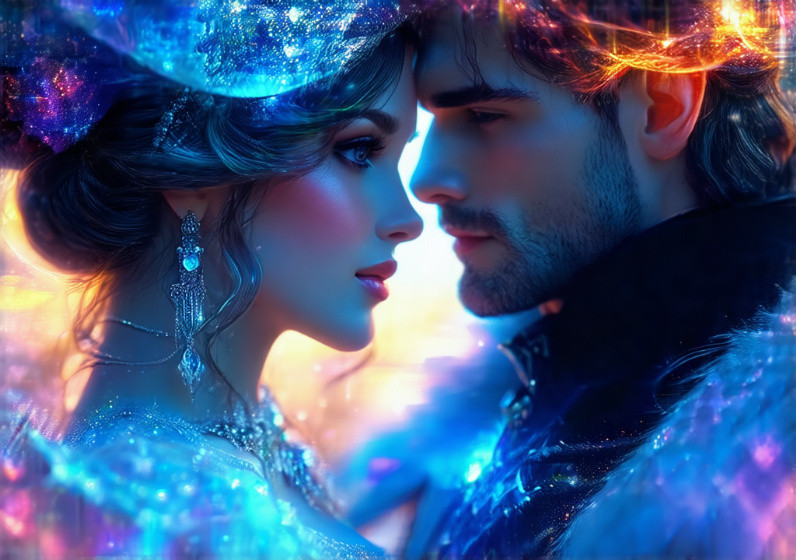
Cognitive Dissonance in Romance: When Logic Meets Passion at First Glance
The Paradox of the Heart: A Rationalist’s Guide to Romantic Collapse 💫
By Dr. Aurelius Vex, M.A.
There is a peculiar irony in the study of human emotion that philosophers have wrestled with for millennia. We are creatures of reason—beings who build bridges, write constitutions, calculate orbits, and dissect the brain into its wet, electrical components. We pride ourselves on our capacity to analyze, categorize, and predict. And yet, when it comes to love, we behave as though we have been swapped for something older, wilder, and far less civilized.
To fall in love is not merely a chemical reaction or a social contract. It is an ontological crisis. It is the moment where the orderly architecture of the self begins to creak under the weight of another person’s existence. For those who view themselves as rational agents navigating a predictable universe, romance becomes less of a journey and more of a riddle. It is a state of cognitive dissonance so profound that it demands not just explanation, but surrender.
Consider the modern romantic: someone who has likely consumed enough literature and self-help advice to know exactly what they are not supposed to do in the early stages of affection. We are told to be cautious, to read the signs, to assess compatibility like a risk analyst reviewing a quarterly report. We curate our personas with the precision of an artist arranging a still life. We smile at the right intervals; we ask questions that signal intelligence but not obsession. We perform desire while simultaneously monitoring the performance.
And then it happens. The dissonance begins.
It starts subtly—a forgotten appointment, a distracted conversation where we were supposed to be engaged, a momentary lapse in social grace because our mind was replaying the way the other person’s eyes crinkled when they laughed. Suddenly, the disciplined self is compromised. We are no longer in control of the narrative. The rational mind, that trusted inner narrator, begins to contradict itself. It says, “You should wait three days before texting back,” and the heart whispers, “They are already asleep; it doesn’t matter.”
This internal friction is not a bug in our psychology; it is a feature. Cognitive dissonance, as Leon Festinger described it in the mid-twentieth century, is the mental discomfort experienced by someone holding two or more contradictory beliefs, values, or beliefs at the same time. In romance, this manifests as a war between the desire for autonomy and the desire for union. We want to be seen as independent thinkers, yet we find ourselves reshaping our opinions to align with the person we admire. We value truth, yet we find ourselves embellishing the mundane so that our shared reality feels more cinematic.
One of the most striking aspects of this dissonance is the erosion of objectivity. In philosophy, we often discuss apophatic understanding—the attempt to describe God or ultimate reality by stating what it is not. Similarly, when we are in love, we understand the beloved not by analyzing their traits, but by experiencing our own transformation through them. The other person becomes a lens through which our own selfhood is refracted. We begin to find joy in trivialities simply because they are shared. A cup of coffee is no longer just caffeine and water; it is a ritual of proximity. A walk in the park is not merely exercise; it is a parallel existence, two minds walking in sync.
But this harmony is fragile. Because love demands vulnerability, and vulnerability is antithetical to the protective shell we build with our logic. To love someone is to give them the map to your weaknesses. If you are proud, they see your pride. If you are insecure, they have a front-row seat to your doubts. The rational mind hates this exposure. It wants to keep the ledger balanced, to ensure that no more is given than received, that the transaction of affection remains fair and equitable. But passion does not calculate. Passion spends recklessly.
There is also the dissonance of time. Logic operates in linear time; it looks at cause and effect, past and future. Love often feels timeless or distorted. Hours can stretch into days when we are together; minutes feel like hours when we apart. The rational mind wants to plan for the future—where will you live? What are your five-year goals? Do our financial models align? But the heart lives in an eternal present tense. It is not concerned with whether this relationship will last a decade; it is concerned with whether the light hitting the other person’s face right now is beautiful enough to make time stand still.
This tension between the temporal and the eternal creates a unique kind of philosophical anxiety. We are creatures who know we will die, yet we build love as if we have forever. This awareness that our passion is temporary only heightens its intensity. The dissonance here is existential: we are finite beings engaging in what feels like an infinite act.
Furthermore, romance challenges the boundary between self and other. In Western philosophy, the self is often treated as a bounded entity—a distinct ego with clear edges. But in love, these edges blur. You begin to think thoughts that aren’t entirely yours; you feel joys that are triggered by someone else’s success; you grieve for their small frustrations as if they were your own. The “I” becomes a collective noun. This is not merely empathy; it is a partial merger of identities. It is a dissolution of the ego in favor of a shared narrative. For a philosopher trained to defend the integrity of the individual, this feels both liberating and terrifying.
We must also acknowledge the role of illusion in this process. To love someone is often to accept their mythos before we have verified their facts. We project our ideals onto them, seeing not who they are, but who we need them to be. This is a form of cognitive dissonance because we know better than to believe that another person can fulfill our deepest longings so perfectly and consistently. And yet, in the heat of passion, the evidence of their imperfection becomes less convincing than the story we have constructed about them.
This does not mean romance is irrational; it means it operates on a different logic—one that values coherence over correctness. The goal is not to be right; the goal is to be together. It is a logic based on resonance rather than deduction. Two people in love are like two tuning forks struck in harmony; they vibrate at a frequency that neither could achieve alone.
Perhaps this is why philosophers have historically been both fascinated and skeptical of romance. The Stoics, for instance, viewed attachments as potential sources of suffering because they made us dependent on external things. They advised maintaining a degree of emotional distance to preserve inner peace. But the romantics—those poets and thinkers who followed—argued that it was in those very attachments that we found our deepest meaning. That it was through the vulnerability of love that we truly understood what it meant to be human.
For the local reader, this philosophical framework might seem abstract. But think about your own experiences. Think about the time you met someone who made you feel like a different person—not better or worse, but expanded. Think about how their presence changed the texture of your days. Think about how they challenged your assumptions and forced you to examine your own values in new light.
In these moments, logic does not disappear; it is simply overwhelmed by a more powerful force. The mind continues its work in the background, cataloging facts, assessing risks, maintaining vigilance. But in the foreground, there is a quiet surrender. A decision to let go of control and trust that this connection has value beyond what can be measured or explained.
So when we speak of cognitive dissonance in romance, we are not diagnosing a problem. We are describing the beautiful contradiction at the heart of human experience: that we are beings who seek order but are moved by chaos; that we build walls to protect ourselves and then find someone who helps us take them down; that we use our reason to understand the world, but it is through love that we truly inhabit it.
To fall in love is to accept a paradox and live inside it. It is to know that you are fragile and to feel strong because of another’s presence. It is to be rational and to choose the irrational for its warmth. In the end, perhaps that is what makes us fully human. Not our ability to solve equations or write philosophies, but our willingness to let logic meet passion at first glance—and to see how beautifully they collide.
May your dissonance be gentle, may your contradictions be meaningful, and may you find someone who helps you make sense of the nonsense that is a beautiful life. 🕊️